
12 Types of Earrings: The Complete 2026 Earring Style Guide
- Written by Provence Team
- Updated on July 21, 2026
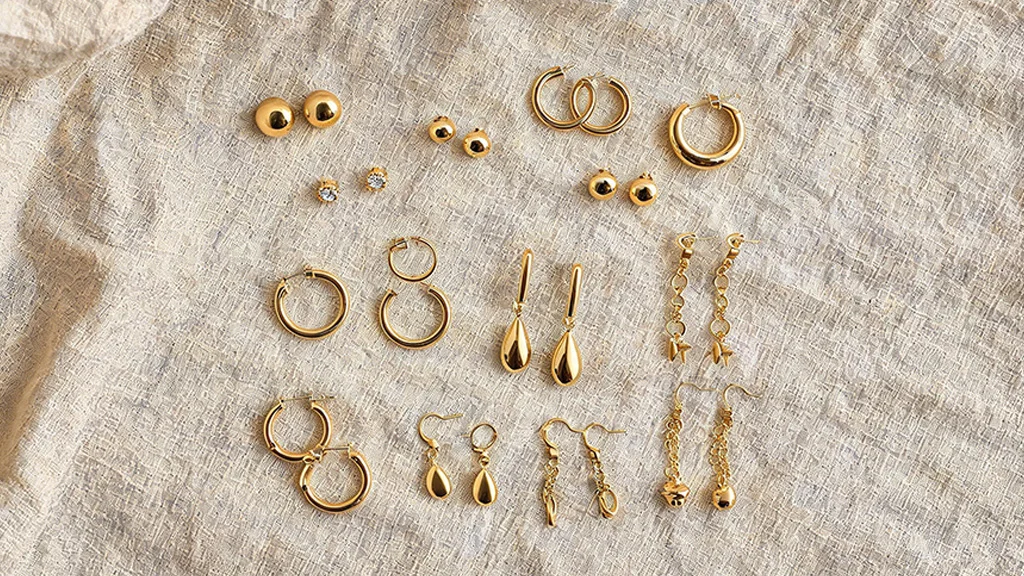
Table of Contents
Earrings are one of the most personal pieces of jewelry you can wear — small enough to live in every day, expressive enough to define a whole look. But with dozens of styles, backing mechanisms, and metal options out there, "what earrings should I buy" is a surprisingly deep question.
This guide breaks down every major type of earring, every common earring back, and the material choices that actually affect comfort, durability, and how a piece wears over time — so you can shop (or design) with real confidence, wherever in the world you're buying from.
Quick Reference: Types of Earrings at a Glance
|
Type |
Description |
Best For |
Recommended Back |
Metal/Setting Note |
|---|---|---|---|---|
|
Stud |
Sits flush on the lobe, no drop |
Everyday wear, work |
Push, screw, flat |
Solid gold holds shape better than plated over years of daily wear |
|
Hoop |
Continuous loop, front to back |
Casual to statement looks |
Hinge, latch, wire |
Hollow tube hoops are lighter for large sizes |
|
Huggie |
Small hoop that hugs the lobe |
Ear stacking, active wear |
Hinge/clicker |
Solid construction resists bending better than thin-wall hollow |
|
Drop |
Hangs 1–3cm, minimal movement |
Elegant, semi-formal |
Lever, push, latch |
Bezel settings protect stones better than prong for everyday drops |
|
Dangle |
Free-moving, longer than drops |
Evening, special occasions |
French wire, lever |
Lightweight metals (lower gauge) reduce lobe strain |
|
Chandelier |
Multi-tiered, ornate |
Formal events, weddings |
Lever, omega |
Distribute weight with omega backs to prevent lobe stretch |
|
Threader |
Thin chain/wire through the piercing |
Minimalist, multiple piercings |
None (self-secure) |
Needs a stiff enough wire gauge to thread smoothly |
|
Cluster |
Multiple stones grouped together |
Bridal, cocktail |
Push, screw |
Pavé settings need secure prongs — check setting quality |
|
Halo |
Center stone ringed with smaller stones |
Maximizing sparkle on a budget |
Push, screw |
Lab-grown diamonds or moissanite lower cost-per-carat significantly |
|
Ear Climber |
Curves upward along the ear |
Trend-forward, red carpet style |
Post + wire support |
Needs a secure back post; heavier climbers need lever support |
|
Ear Cuff |
Wraps cartilage, no piercing needed |
No-piercing styling |
None (tension-fit) |
Adjustable bands in 14K gold hold shape longer than plated |
|
Jacket |
Stud in front, ornament behind lobe |
Transforming existing studs |
Push, screw |
Jacket opening must match the post gauge of your existing stud |
What Are the Different Types of Earrings?
Stud Earrings
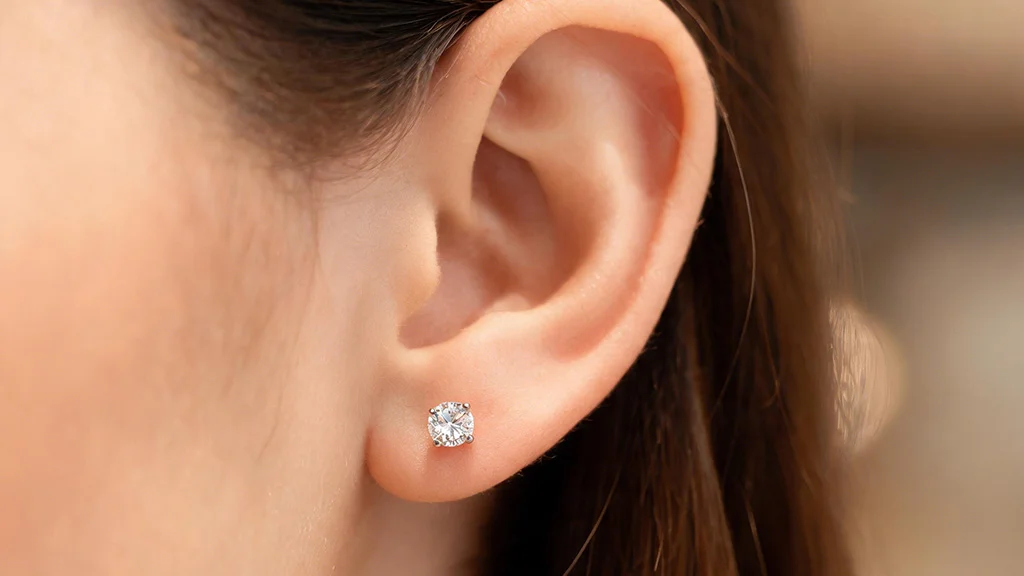
Stud earrings are the quiet workhorse of any jewelry box. A stud sits directly on the earlobe without dropping, swinging, or climbing — just a post through the piercing and a decorative element on front. They've been worn since antiquity as a marker of status and have since become the universal starter earring: the first pair most people get pierced with, and often the last pair they take off at night.
Styling tip: Studs pair with literally everything, which is exactly the point. A diamond or moissanite solitaire stud works from the office to a formal dinner; a small gold stud is the anchor piece in any curated ear stack.
Material note: Because studs sit against skin for hours at a time, metal purity matters more here than in almost any other style. Solid 14K or 18K gold resists tarnishing and is far less likely to trigger sensitivity than gold-plated brass or nickel alloys — an important consideration for anyone with sensitive ears.
Hoop Earrings
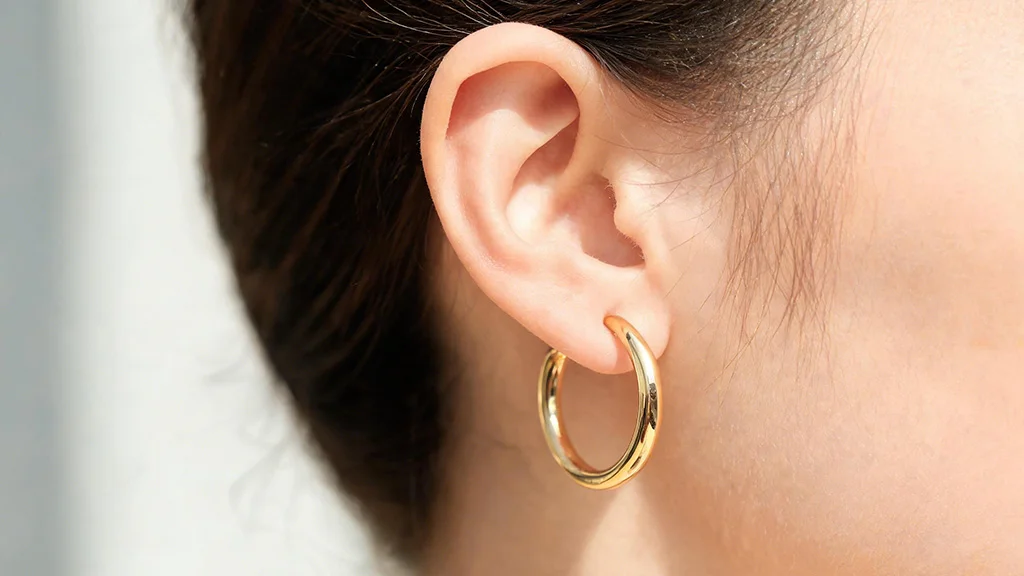
Hoops form a continuous loop from the front of the lobe to the back. They're one of the oldest earring shapes in human history and one of the most culturally significant — worn as symbols of status, identity, and self-expression across civilizations for thousands of years, and still one of the most searched jewelry styles today.
Hoops range from small huggie-adjacent sizes (10–20mm) that read as everyday basics, to medium hoops (30–50mm) that work as a daily statement, up to oversized 60mm+ hoops built for maximum impact.
Styling tip: Smaller hoops are understated enough for daily wear; larger hoops photograph beautifully and look best with hair pulled back or in a ponytail.
Material note: For larger hoops, hollow tube construction keeps the earring light enough to wear comfortably all day without dragging on the lobe — solid metal at that size gets heavy fast.
Huggie Earrings
Huggies are the compact, close-fitting cousin of the hoop — instead of swinging freely, they hug the lobe tightly. Their snug fit makes them a favorite for building an ear stack, since two or three huggies can sit side by side without tangling.
Styling tip: Stack two plain huggies with one pavé pair for texture, or wear a single huggie with a stud above it for a minimal, "set it and forget it" look you can sleep in.
Best backs: Hinged clicker closures are standard here — they snap shut securely and sit flush, which is exactly what you want on a piece designed to be worn continuously.
Drop Earrings
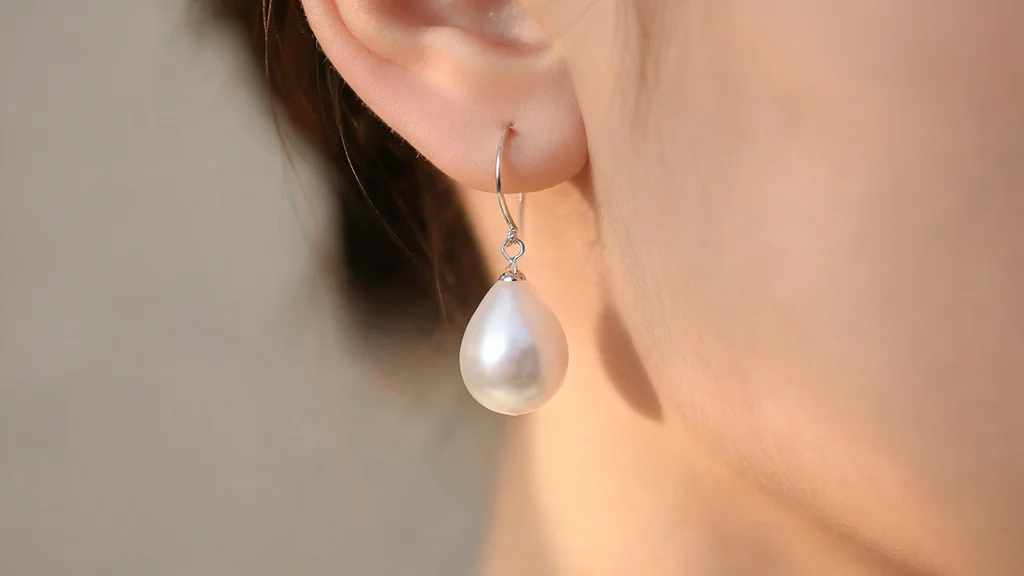
Drop earrings extend a short, fixed distance — usually 1 to 3 centimeters — below the earlobe, with very little independent movement. Think of them as the bridge between a stud and a dangle: more presence than a stud, more composure than a swinging dangle. The style has roots in Renaissance-era European jewelry, where pearl and gemstone drops caught candlelight at court.
Styling tip: A single pearl or gemstone drop softens an outfit instantly; a geometric metal drop reads more modern. Off-the-shoulder or V-neck necklines give drops room to be seen.
Material note: Bezel settings (where metal fully wraps around the stone edge) are more secure for everyday drops than open prong settings, since drops see more incidental movement than studs.
Dangle Earrings
Dangle earrings are the free-moving version of the drop — longer, with components that swing and catch light independently rather than staying fixed. They're built for drama, and they deliver it: the movement is what makes them feel alive under evening light.
Styling tip: Reserve longer dangles for evenings and events where their movement can actually be seen; shorter dangles work for daytime if the design is simple.
Material note: Because dangles hang for extended periods, wire gauge and overall weight matter for lobe comfort — a lighter-gauge gold wire construction reduces the pulling sensation that heavier dangles can cause over a full evening.
Chandelier Earrings
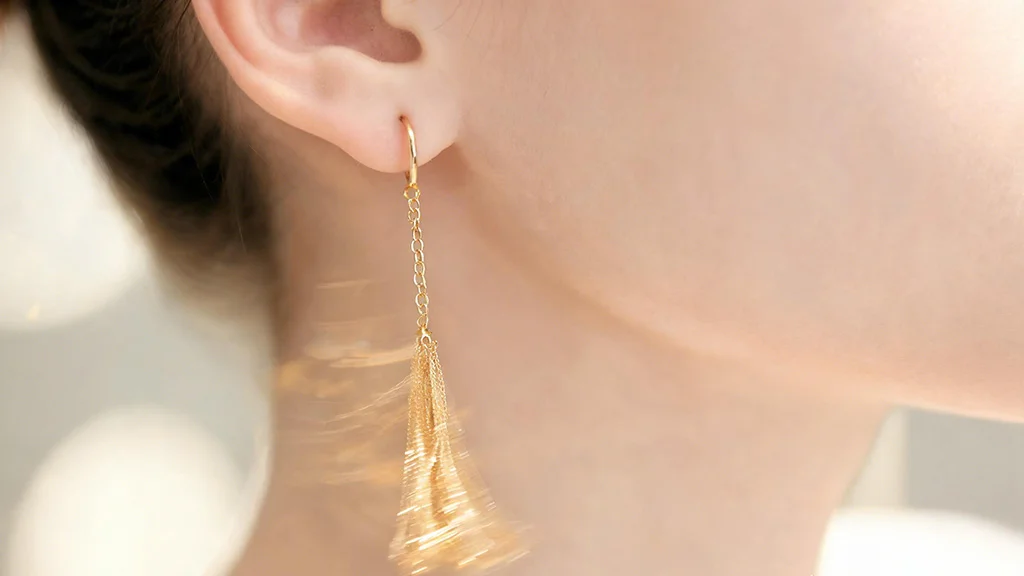
Chandelier earrings are the most elaborate style on this list — a branched, multi-tiered design that fans outward, resembling the light fixture they're named for. They've been a red-carpet staple for decades, precisely because their scale and sparkle are built to be photographed.
Styling tip: Chandeliers work best as the single focal point of a look — pair with a simple neckline and minimal other jewelry so they don't compete for attention.
Material note: Given their size, weight distribution is critical. Omega backs, which press flat against the back of the lobe, support the earring's weight far better than a simple post — reducing strain on the piercing over a long event.
Threader Earrings
Threader earrings use a thin chain or wire that passes all the way through the piercing, so the design shows on both the front and back of the ear simultaneously. Despite their modern, minimalist reputation, threaders actually date back to Victorian-era jewelry.
Styling tip: Pull the chain through to different lengths for a custom, asymmetric look, and layer with studs or huggies elsewhere on the ear for contrast.
Material note: Threaders rely entirely on the wire itself for security — no clasp, no back — so wire gauge needs to be stiff enough to hold shape and thread smoothly, but soft enough not to feel sharp against skin.
Cluster Earrings
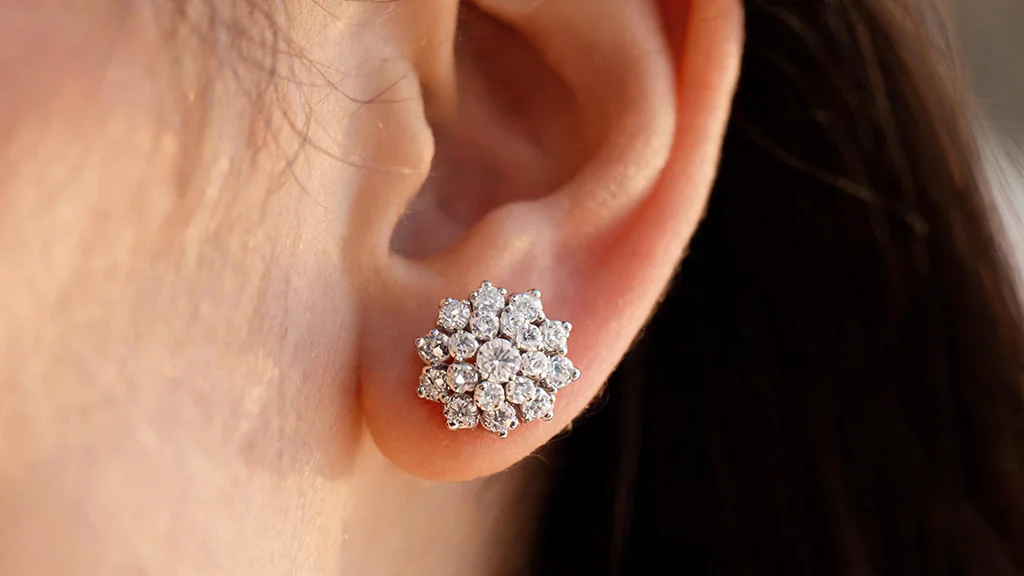
Cluster earrings group several smaller stones together to create the visual impact of one larger piece. The style traces back to Victorian and Edwardian jewelry, when florets and starburst motifs were built from multiple small stones set close together.
Styling tip: Cluster studs suit bridal and formal looks; more playful, colorful clusters work well for daytime.
Material note: This is where lab-grown diamonds and moissanite genuinely shine — because clusters use many small stones rather than one large one, switching to lab-grown or moissanite can meaningfully lower cost without any visible compromise in sparkle.
Halo Earrings
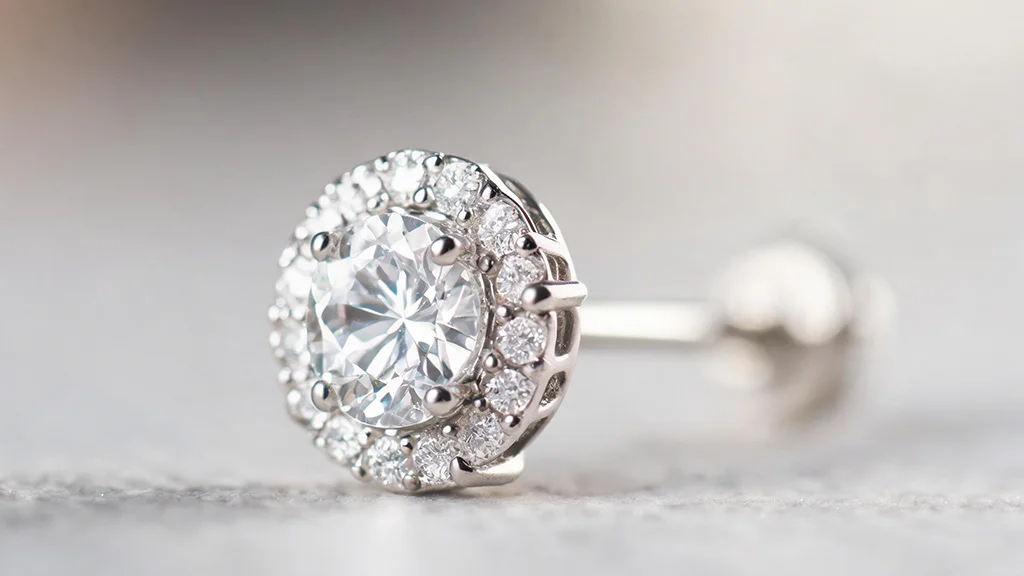
Halo earrings surround a center stone with a ring of smaller accent stones, which makes the center stone appear larger and adds an extra layer of brilliance around it. It's a design built specifically to maximize visual size and sparkle relative to carat weight — which is part of why it's so popular for diamond and moissanite studs.
Styling tip: Halos work in stud, drop, and dangle formats, so they scale from everyday wear to formal without losing their identity.
Material note: A halo setting is one of the most cost-effective ways to increase apparent size, especially when the accent stones are lab-grown diamonds or CZ around a natural or lab-grown center stone.
Ear Climbers (Crawlers)
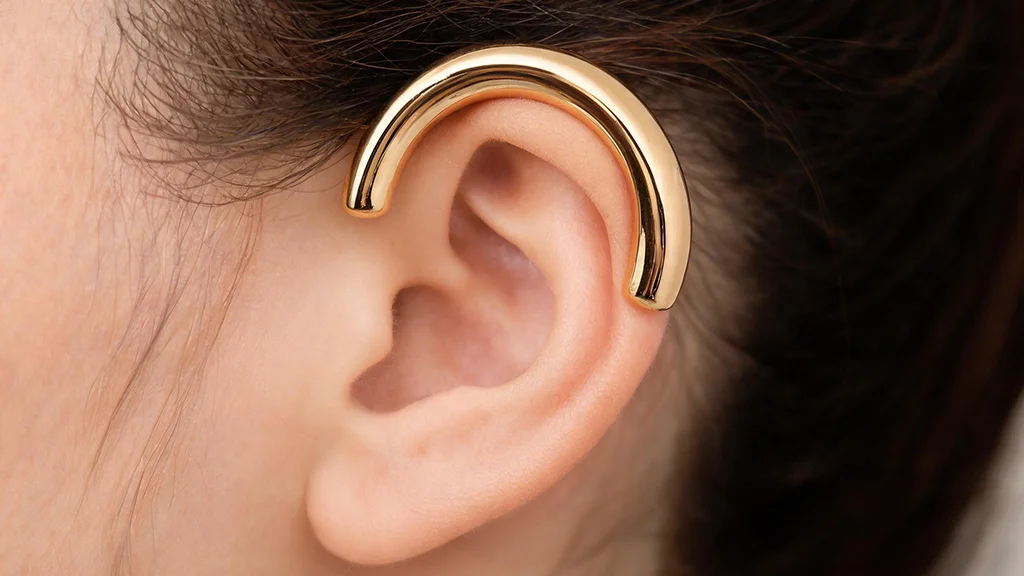
Ear climbers move in the opposite direction from a drop or dangle — instead of hanging down, they follow the curve of the ear upward from the lobe. The style trended into the mainstream after appearing on couture runways and red carpets in the mid-2010s, and it's remained a fixture of contemporary, trend-forward jewelry design since.
Styling tip: Climbers are statement enough to wear alone — sweep hair back to show off the full shape rather than layering other pieces around them.
Material note: Because the design extends beyond the lobe, a secure back post combined with a supporting wire is important, especially for climbers set with multiple stones along their length.
Ear Cuffs
Ear cuffs wrap around the cartilage or lobe using tension alone — no piercing required. Their history stretches from ancient warrior cultures to 1980s punk fashion, and they remain the go-to option for anyone who wants a bold ear look without committing to a new piercing.
Styling tip: A single cuff makes a strong statement on its own; stacking cuffs with studs or huggies elsewhere on the ear builds a full curated look.
Material note: Adjustable cuffs made from solid 14K gold hold their shape through repeated adjustment far better than thin gold-plated versions, which can lose tension and stretch out of shape over time.
Jacket Earrings
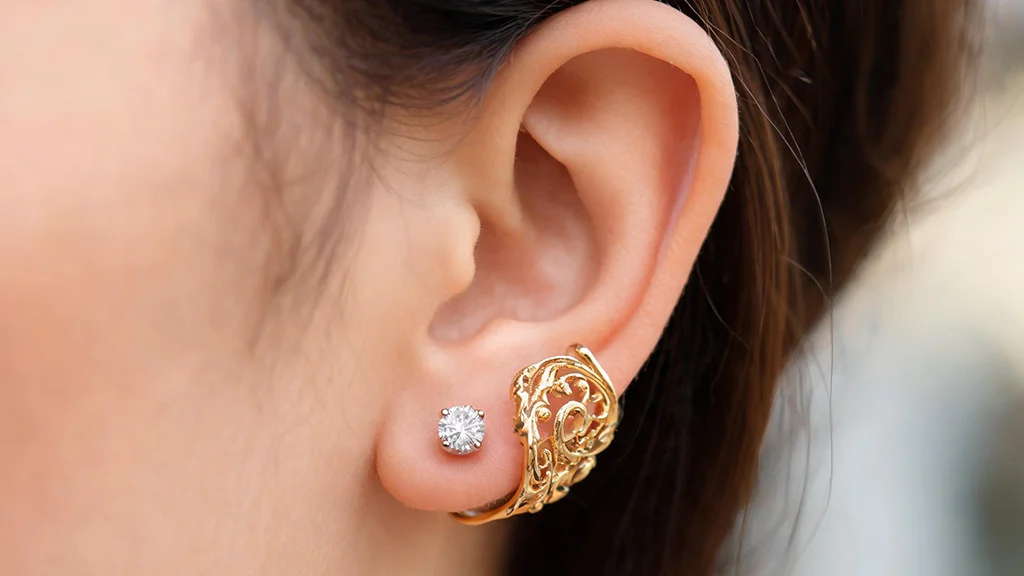
Jacket earrings are a two-part design: a stud sits in the front of the lobe as usual, while a separate ornamental "jacket" attaches behind it, visible around the edges of the lobe. It's a clever way to transform a simple stud into something more elaborate without buying an entirely new pair.
Styling tip: Because jackets are interchangeable, one stud can pair with several different jackets for different occasions.
Material note: The jacket's opening needs to match the gauge of your existing stud post precisely — this is worth checking before buying, since fit varies more here than with any other style.
Types of Earring Backs
The backing mechanism you choose affects three things: how secure the earring is, how comfortable it feels over hours of wear, and how easy it is to put on and take off. Here's how the main types compare.
|
Back Type |
How It Works |
Best For |
Security |
Comfort |
|---|---|---|---|---|
|
Push / Friction |
Post slides through a backing held by tension |
Studs, everyday earrings |
Moderate |
High |
|
Screw Back |
Backing threads onto a grooved post |
Diamond studs, valuable pieces |
High |
Moderate |
|
Hinge Back |
Hinged post snaps into a groove, closing loop |
Hoops, huggies |
High |
High |
|
Latch Back |
Hinged latch folds over the post |
Dangles, heavier drops |
High |
Moderate |
|
Lever Back |
Curved wire clasps shut with a hinge |
Drops, dangles |
High |
High |
|
Omega Back |
Post fits under a hinged, flattened clip |
Chandeliers, heavy statement pieces |
High |
High (distributes weight) |
|
French Wire / Shepherd Hook |
Curved wire loops through, no clasp |
Lightweight dangles |
Low–moderate |
High |
|
Flat Back |
Post secures at the front rather than back |
New or cartilage piercings |
High |
High (won't poke) |
Push Backs (Friction Backs)
The most common backing style by far. A smooth post passes through the piercing, and a small friction-fit piece — sometimes called a butterfly back — slides on and holds through tension. Easy to use, but they can loosen with repeated removal, so they're best suited to earrings you don't take on and off constantly.
Screw Backs
A threaded post pairs with a backing that twists into place, which makes screw backs one of the most secure options available. They take a bit longer to fasten than a push back, which is a fair trade-off for the peace of mind they offer on valuable pieces like diamond studs.
Hinge Backs
Common on hoops and huggies, a hinge back snaps a post into a groove to close a complete loop through the ear. You'll hear (and feel) a distinct click when it's secure, which makes hinge backs both reliable and satisfying to use.
Latch Backs
A hinged latch folds over the post to lock the earring in place — a mechanism that shows up frequently on heavier or vintage-style pieces, since deliberate opening is required, making accidental loss unlikely.
Lever Backs
A curved wire that clasps shut against the back of the ear, forming a complete, secure loop. Lever backs are especially well suited to drop and dangle earrings, since the closed loop stops the earring from pulling downward against the piercing over time.
Omega Backs
Named for their resemblance to the Greek letter Ω, omega backs use a hinged clip that folds over and presses flat against the back of the lobe. Because they distribute weight across a wider surface, they're the preferred choice for heavier chandelier or statement pieces.
French Wire (Shepherd Hooks)
A simple curved wire threads through the piercing and rests in place by gravity alone — no clasp involved. They're lightweight and comfortable, which makes them popular for dangle earrings, though a rubber stopper is worth adding if you want extra security against slipping out.
Flat Backs
Designed with the post securing at the front of the ear rather than behind it, flat backs (sometimes called threadless posts) are the most comfortable option for new piercings and cartilage placements like the helix or conch, since there's no post poking out behind the ear.
Choosing Earrings by Face Shape
- Round faces — Long, linear styles like dangles or elongated geometric drops add visual length and contrast against the face's natural roundness.
- Oval faces — The most versatile shape; virtually any style works, from studs that highlight the eyes to longer designs that draw attention toward the jawline.
- Square faces — Curved shapes soften angular features — think hoops, circular studs, or chandeliers with flowing lines rather than sharp geometry.
- Heart-shaped faces — Earrings that are narrower at the top and wider at the bottom (like teardrop drops) balance a fuller forehead with a narrower chin.
A Note on Sizing and Piercing Standards Around the World
Earring sizing conventions aren't universal, which matters if you're shopping or designing across markets. In the US, hoop sizes are usually listed in millimeters or inches interchangeably, and post/wire thickness is often described in gauge (18–22 gauge is standard for lobe piercings). In the UK and EU, millimeter sizing is the norm throughout, with less use of the gauge system outside of body jewelry specifically. Standard lobe piercing tools across most markets create a hole compatible with an 20–18 gauge post, but cartilage and second/third lobe piercings often use finer 20 gauge posts for comfort. If you're buying or manufacturing for a global audience, listing both millimeter and gauge measurements — rather than relying on regional shorthand — makes a listing usable everywhere rather than just at home.
Frequently Asked Questions
Drop earrings hang a short, fixed distance below the lobe with minimal movement. Dangle earrings are longer and designed with components that move independently, creating more visible motion.
Screw backs and hinge/lever backs offer the highest security, since both require a deliberate action to open rather than relying on friction alone. They're the standard choice for valuable or heavier earrings.
Look for solid 14K or 18K gold, platinum, or titanium — all low-reactivity metals. Nickel is the most common cause of allergic reactions, so it's worth avoiding nickel-containing alloys and lower-quality plated pieces entirely, especially for daily-wear studs.
Flat-back studs and small, well-fitted huggies are generally the safest option for sleeping, since they sit close to the ear without protruding edges. Dangling styles and anything with an open hook should come off before bed to avoid snagging or irritation.
Yes — both are popular, durable alternatives to natural diamonds. Lab-grown diamonds share the same chemical and optical properties as natural diamonds at a lower price point, while moissanite offers comparable brilliance at an even more accessible cost. Both work well across virtually every earring style in this guide, from studs to clusters to halos.
It depends on the style and weight. Lightweight studs work well with push or screw backs; hoops and huggies need hinge closures; drops and dangles perform best with lever backs or French wire; and heavier statement pieces like chandeliers benefit from the weight distribution of an omega back.