
What is April’s Birthstone? Diamond & White Sapphire Guide
- Written by Provence Team
- Updated on July 20, 2026
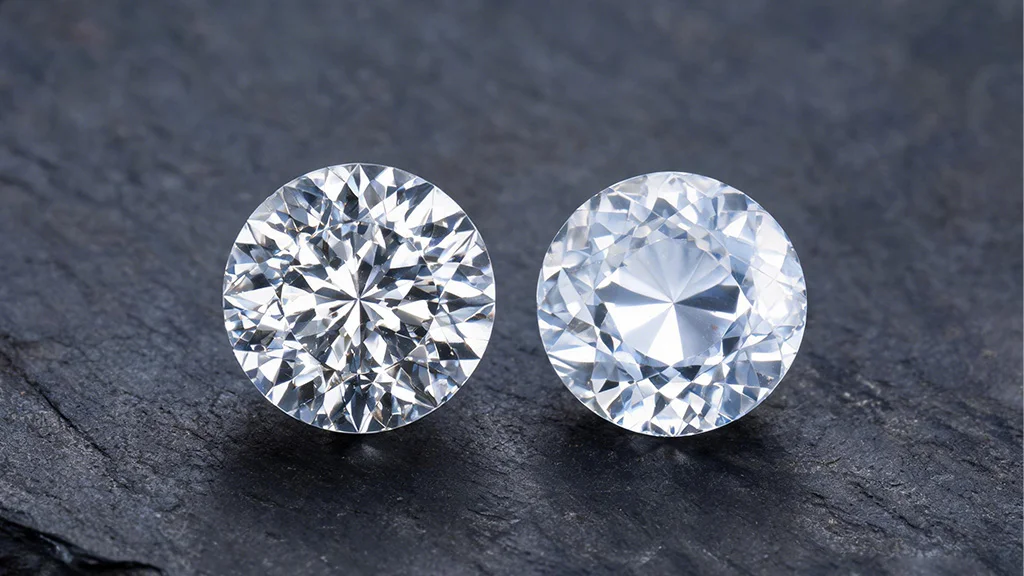
Table of Contents
April's birthstone is the diamond — a gem so linked to brilliance and endurance that its name comes from the Greek adamas, "invincible." But diamond isn't April's only stone. White sapphire has long stood beside it as a recognized alternate, and lab-grown diamond and moissanite have become serious modern options for anyone shopping this month. Here's everything worth knowing before you buy.
April Birthstone Fast Facts
- Primary birthstone: Diamond — the traditional and most widely recognized April birthstone.
- Alternate birthstone: White sapphire — a modern addition prized as a diamond alternative.
- Diamond hardness: 10 on the Mohs scale, the hardest known natural material.
- White sapphire hardness: 9 on the Mohs scale, second only to diamond.
- Typical color: Colorless to near-colorless, though diamonds also occur in yellow, pink, blue, and green.
- Modern alternatives: Lab-grown diamond and moissanite offer the same look at different price points.
Symbolism: Strength, clarity, purity, and everlasting love.
What Is April's Birthstone?
The name "April" is thought to trace back to the Latin aperire, meaning "to open" — a fitting root for the month when spring flowers and buds begin to unfurl. It's a fitting backdrop for a birthstone that's just as associated with new beginnings: the diamond, worn as a symbol of clarity, strength, and enduring love since long before it became the official birthstone of the month.
Diamond is the primary and most widely recognized birthstone for April. Alongside it, white sapphire is recognized as a secondary or alternate April birthstone — a distinction that goes back to jewelry trade lists that expanded some months to include a more accessible option next to a traditional gem. Both stones share a colorless, light-reflective beauty, but each carries its own history, hardness, and price point.
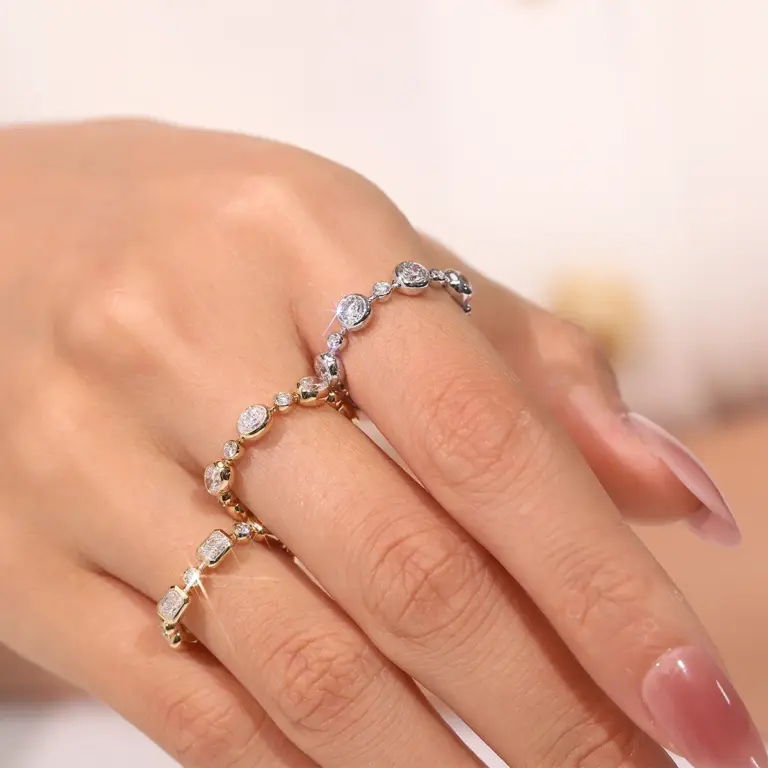
For anyone born in April — or shopping for someone who is — that gives you a genuine choice: the timeless prestige of diamond, the understated elegance of white sapphire, or, increasingly, a lab-grown diamond or moissanite that delivers the same sparkle with a different story behind it.
Diamond: Meaning & Symbolism
Diamond takes its name from the Greek adamas — "unbreakable" or "invincible" — and that etymology has shaped almost everything people believe about the stone. As April's birthstone, diamond is associated with strength, clarity, and balance, and is widely thought to bring the wearer courage, confidence, and resilience.
Its symbolism runs deeper than durability alone. Because a well-cut diamond returns light with such precision, it has long been linked to clarity of thought and honesty. Combined with its physical permanence, this has made diamond the definitive symbol of eternal love — the reason it dominates engagement ring design worldwide, and the traditional gift for 60th and 75th wedding anniversaries.
Historically, diamond's powers were thought to go even further. Second-century writers claimed it warded off the evil eye; medieval healers believed a heated diamond, placed against the skin, could draw toxins from the body and protect against plague and poison. None of that survives as medical fact, of course — but it's a reminder of just how long diamond has carried outsized meaning for the month it represents.
The History of Diamond
Diamond's story begins in India, where the stones were gathered from riverbeds and streams as early as the fourth century BCE. Long before Europe had any real diamond trade, Indian diamonds were already prized by royalty and the wealthy, moving along caravan routes toward medieval markets in Venice by the 1300s and 1400s.
The first diamond engagement ring on record dates to 1477, when Archduke Maximilian of Austria gave one to Mary of Burgundy — an event historians often point to as the true origin of the diamond engagement tradition. As India's supply declined in the early 1700s, Brazil stepped in as the dominant source for more than 150 years, with diamonds turning up incidentally in gold-panning operations along the Jequitinhonha River.
Everything changed in the late 1860s with the discovery of diamond deposits near Kimberley, South Africa. Cecil Rhodes founded De Beers Consolidated Mines in 1888, and within twelve years the company controlled roughly 90% of the world's rough diamond production — a level of market dominance that shaped the modern diamond industry for the next century.
Today, major diamond production spans Russia, Botswana, the Democratic Republic of the Congo, Canada, and Australia. And in the last two decades, a genuinely new chapter has opened: lab-grown diamonds, created in controlled environments that replicate the heat and pressure of natural formation, now offer the same crystal structure, hardness, and optical properties as mined stones — without the mining.
White Sapphire: Meaning & Symbolism
White sapphire is corundum — the same mineral family as ruby and colored sapphire — but without the trace elements that give those stones their color. That absence of color has made white sapphire a symbol of purity, wisdom, and clarity of thought in its own right, distinct from diamond even though the two look similar to the untrained eye.
Where diamond's symbolism centers on strength and permanence, white sapphire's leans toward sincerity and mental clarity. It's often described as a stone of protection and good fortune, prized historically by clergy and royalty as a marker of divine favor rather than worldly status.
The History of White Sapphire
Sapphires in general have been treasured since antiquity, worn by ancient Greek and Roman elites who believed the stones were gifts from the gods, imbued with protective power. Clergy and nobility across medieval Europe wore sapphires — colored and white alike — as signs of divine favor and celestial connection, and the stones saw a resurgence during the Renaissance as symbols of status among European aristocracy.
White sapphire's major modern sources include Sri Lanka, Madagascar, and East Africa, and — like diamond — it now has a lab-created counterpart. Lab-created white sapphire offers the same clarity and durability as its mined equivalent, giving buyers an ethical, accessible route to the stone without sacrificing its signature sparkle.
What Color Is April's Birthstone?
The defining color of April's birthstones is, paradoxically, the absence of color. Diamond's most prized form is colorless to near-colorless, graded on a scale that rewards the least visible tint — though nature also produces "fancy color" diamonds in yellow, brown, pink, blue, and green, with color arising from trace elements like nitrogen or boron, or from distortions in the crystal lattice itself.
White sapphire, by contrast, is defined entirely by the absence of the trace minerals that turn corundum into blue, pink, or yellow sapphire. Its appeal is a clean, glass-clear brilliance — closer to a diamond's look than any other gemstone in the corundum family, which is exactly why it has endured as diamond's most natural alternate.
Diamond vs. White Sapphire vs. Lab-Grown Diamond vs. Moissanite
Anyone shopping for April birthstone jewelry today has four realistic options, each with a different balance of hardness, price, and sourcing story. Here's how they stack up:
|
Stone |
Mohs Hardness |
Typical Price Tier |
Sourcing |
Best For |
|---|---|---|---|---|
|
Natural Diamond |
10 |
Highest |
Mined — Africa, Russia, Canada, Australia |
Traditional engagement pieces, heirloom jewelry |
|
Lab-Grown Diamond |
10 |
20–40% below natural |
Grown in controlled labs; identical structure |
Buyers wanting real diamond properties at lower cost |
|
White Sapphire |
9 |
Mid |
Mined — Sri Lanka, Madagascar, East Africa; also lab-created |
Everyday wear, budget-conscious alternate birthstone |
|
Moissanite |
9.25 |
Lowest of the four |
Lab-created (silicon carbide) |
Maximum brilliance per dollar, statement pieces |
All four options are suitable for daily wear, though hardness alone doesn't tell the whole story — cut quality affects how any of these stones performs in real light, and setting design affects how well they hold up over years of wear.
Understanding Diamond Quality: The 4Cs
Whether you're choosing a natural or lab-grown diamond for an April birthstone piece, quality comes down to four factors, evaluated together rather than in isolation.
- Cut — how well the stone is shaped and faceted; the single biggest factor in how much a diamond sparkles.
- Color — graded on proximity to colorless; the closer to colorless, the higher the grade for standard white diamonds.
- Clarity — the presence (or absence) of internal inclusions and surface characteristics, most invisible to the naked eye.
- Carat — the weight of the stone, not a direct measure of visual size, since cut proportions affect how large a diamond appears.
The same logic of proportion and light performance applies to white sapphire and moissanite, even though they're not graded on the same 4Cs framework diamonds use.
From the Bench: How Provence Jewellery Crafts April Birthstone Pieces
As a fine jewelry manufacturer producing solid gold settings for diamond, lab-grown diamond, moissanite, and natural gemstone jewelry, Provence Jewellery works directly with April birthstone pieces at every stage — from stone sourcing and quality verification through casting, setting, and final quality control.
That manufacturing vantage point matters for buyers and retail partners alike. Because our production covers natural diamonds, lab-grown diamonds, and moissanite side by side, we can advise honestly on which option best fits a given design, budget, and durability requirement, rather than defaulting to a single stone type. Our OEM/ODM partners rely on this flexibility to offer April birthstone collections across multiple price tiers without compromising on solid gold construction or setting quality.
Caring for Diamond & White Sapphire Jewelry
Diamond Care
Diamond's hardness makes it durable enough for an ultrasonic cleaner in most cases, though heavily included or treated stones are better cleaned with warm water, mild soap, and a soft brush. Have settings checked periodically by a professional jeweler, since a diamond can still chip on impact even if it can't be scratched.
White Sapphire Care
Clean white sapphire with lukewarm soapy water and a soft brush, rinsing thoroughly and drying with a lint-free cloth. Avoid harsh chemical cleaners, and store pieces separately from harder stones to prevent surface scratches.
Frequently Asked Questions
April's birthstone is diamond, with white sapphire recognized as a secondary or alternate birthstone for the month.
White sapphire is a genuinely recognized alternate birthstone for April, not merely a diamond simulant — though its diamond-like appearance is part of its appeal.
Diamond is most commonly colorless to near-colorless, though it also occurs in yellow, pink, blue, and green. White sapphire is prized for the same clear, colorless brilliance.
Yes. Lab-grown diamonds share the same chemical composition, hardness, and optical properties as natural diamonds, and are recognized as genuine diamond under FTC guidelines provided they're properly disclosed.
Diamond ranks 10 on the Mohs hardness scale and white sapphire ranks 9, making both suitable for rings and other jewelry worn daily, though neither is immune to chipping from hard impact.
White sapphire is natural or lab-created corundum with a more subdued sparkle; moissanite is a lab-created silicon carbide with noticeably more fire and rainbow flash than either diamond or white sapphire.