
8 Types of Gold Colors: Yellow, White, Rose & Rare Colors
- Written by Provence Team
- Updated on August 6, 2026
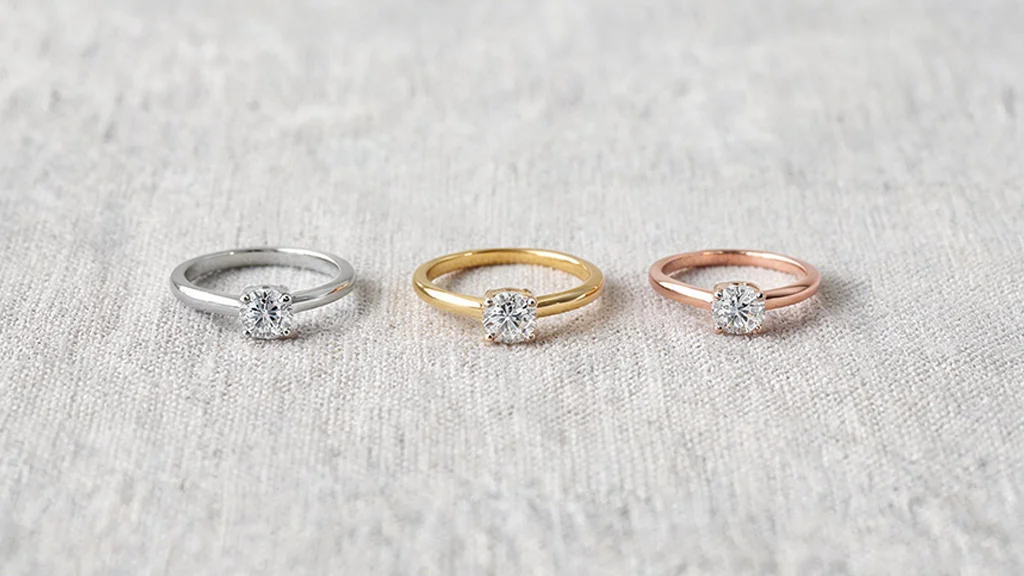
Table of Contents
Pure gold has exactly one color: a warm, unmistakable yellow. Every ring, chain, and pendant you have ever seen in white, rose, green, or black gold owes its color not to the gold itself, but to the other metals blended into it. Understanding this simple fact — that gold color is a matter of alloy, not purity — is the key to making sense of the dozens of gold-colored options on the market today.
This guide covers all eight recognized gold colors used in fine jewelry: the three everyday staples (yellow, white, and rose) and five rarer, fancier shades (green, gray, purple, blue, and black). You will find the metallurgy behind each color, a full side-by-side comparison, indicative pricing in USD, GBP, and EUR, and guidance on how gold colors are manufactured to consistent, safe standards.
As a fine jewelry manufacturer working daily with solid gold alloys, lab-grown diamonds, moissanite, and natural gemstones for brands and retailers across the US, UK, and EU, we see these alloys formulated and cast from raw metal on our own production floor — this guide reflects that manufacturing perspective, not just a retail one.
How Gold Gets Its Color
Gold in its purest form — 24 karat (24K) — is 99.9% pure metal and always a rich, deep yellow. It is also too soft for everyday jewelry: a pure gold ring would bend out of shape from normal wear within weeks. To make gold strong enough to wear, jewelers alloy it with other metals, and those alloying metals are what shift its color.
The karat number tells you how much pure gold is present (18K is 75% gold, 14K is 58.3% gold, and so on) — it says nothing about color. An 18K yellow gold ring and an 18K white gold ring contain the exact same proportion of pure gold; only the remaining 25% of alloy metal differs, and that difference is entirely responsible for the color you see.
Alloy Metal → Resulting Color
|
Alloy Metal → Resulting Color |
Effect on Color |
|---|---|
|
Copper |
Shifts gold toward red, pink, and rose tones — the more copper, the deeper the rose hue |
|
Silver |
Pales gold toward a lighter yellow, and in higher concentration pushes it toward green |
|
Palladium or Nickel |
Bleaches gold toward white/silvery tones |
|
Zinc |
Deepens green tones when combined with silver |
|
Aluminum |
Forms a distinct intermetallic compound that turns gold violet-purple |
|
Indium or Gallium |
Forms intermetallic compounds that turn gold blue |
|
Rhodium, ruthenium, or cobalt (surface treatment) |
Coats gold in a black or gunmetal finish rather than alloying through the metal |
The Big Three Types of Gold Colors: Yellow, White & Rose Gold
Roughly 95% of all gold jewelry sold worldwide is yellow, white, or rose gold. These three dominate for a simple reason: they balance color, affordability, and everyday durability better than any of the rarer alloys.
Yellow Gold
Yellow gold is the closest color to pure, natural gold. It is typically alloyed with a blend of copper and silver — enough to add strength without meaningfully shifting the warm yellow tone. Higher karats (22K, 18K) appear deeper and richer; lower karats (14K, 10K) look paler because more alloy metal has been mixed in.
Composition (18K): 75% gold, with the remaining 25% typically split between copper and silver.
Durability: Softer than white or rose gold and more prone to fine scratches, though 14K yellow gold is a durable, everyday-wear-friendly choice.
Best for: Warm skin tones, traditional and vintage-inspired designs, buyers who want the lowest-maintenance gold color — yellow gold never needs re-plating.
White Gold
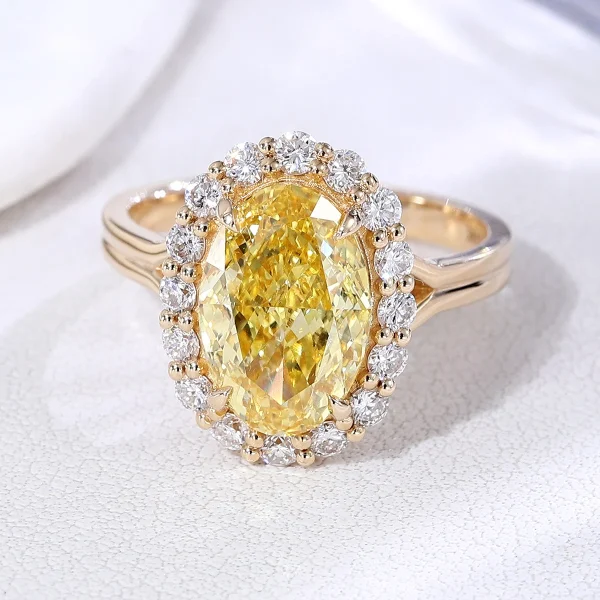
White gold is created by alloying gold with white metals — historically nickel, though palladium-based alloys have become the industry standard because they avoid nickel-related skin sensitivity. Even after alloying, white gold retains a faint warm undertone, which is why almost all white gold jewelry is finished with a thin rhodium plating for a bright, reflective, platinum-like shine.
Composition (18K): 75% gold, alloyed with palladium, nickel, or silver, then rhodium-plated.
Durability: Harder than yellow gold; the rhodium layer adds scratch resistance but wears down over time and typically needs re-plating every 1–3 years.
Best for: Cooler skin tones, diamond and colorless-gemstone settings (white metal enhances brilliance), buyers comfortable with periodic rhodium maintenance.
A note on allergies: nickel is one of the most common contact allergens in jewelry. Buyers with sensitive skin should specifically ask for palladium-based white gold rather than assuming all white gold is equivalent — the alloy metal, not the color, determines allergy risk.
Rose Gold
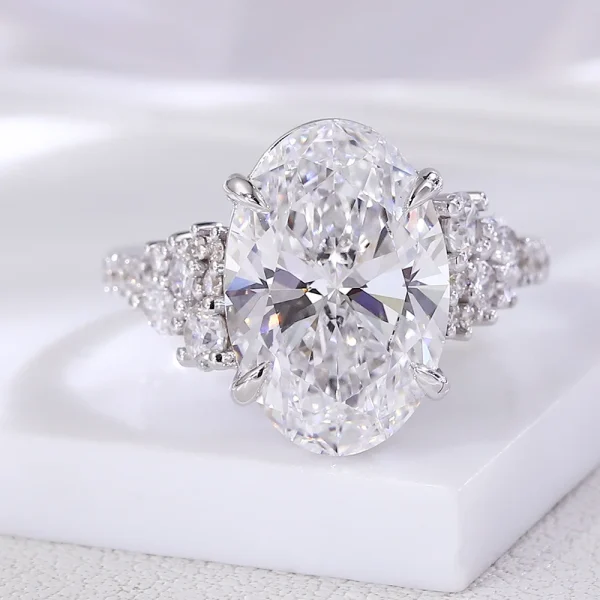
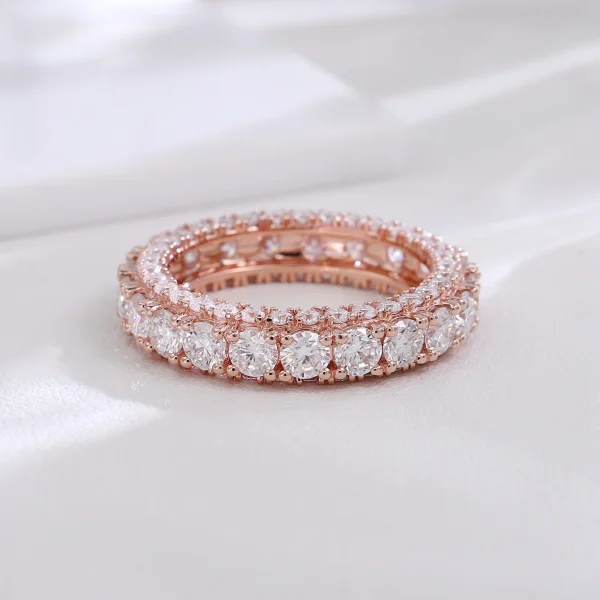
Rose gold gets its pink-to-red hue from copper, alloyed with gold and a small amount of silver. The more copper in the mix, the deeper and redder the tone. Because copper is a hardening metal, rose gold is typically the most scratch-resistant of the big three — a practical advantage as well as an aesthetic one.
Composition (18K): 75% gold, roughly 22% copper, and a small remainder of silver.
Durability: The most durable of the three main colors thanks to copper's hardness; does not require re-plating and holds its color permanently.
Best for: Vintage and romantic styling, active lifestyles that demand durability, and buyers with copper (rather than nickel) sensitivity, since copper allergies are comparatively rare.
Yellow vs. White vs. Rose Gold — Quick Comparison
|
Yellow Gold |
White Gold |
Rose Gold |
|
|---|---|---|---|
|
Alloy metals |
Copper, silver |
Palladium or nickel + rhodium plating |
Copper, small amount of silver |
|
Durability |
Softest of the three |
Harder; plating wears over time |
Hardest of the three |
|
Maintenance |
Low — occasional polishing |
Moderate — re-plate every 1–3 years |
Low — color is permanent |
|
Hypoallergenic? |
Generally yes at higher karats |
Only if nickel-free (palladium-based) |
Generally yes; rare copper sensitivity |
|
Best skin tone match |
Warm tones |
Cool tones |
Complements most tones |
Rare & Fancy Gold Colors
Beyond the big three, metallurgists can push gold into green, gray, purple, blue, and black — colors rarely seen outside custom, high-end, or statement jewelry. Each comes from a distinct alloying approach, and each carries its own practical trade-offs worth knowing before you buy.
Green Gold (Electrum)
Green gold, also called electrum, is created by alloying gold primarily with silver — sometimes with a touch of zinc or copper. It does not appear as a bold, leafy green; rather, it takes on a subtle, yellow-green cast that has made it a favorite in Art Nouveau-era and vintage-revival jewelry, especially paired with emeralds.
Typical composition: 18K green gold is roughly 75% gold and 25% silver; 14K formulations add zinc and copper for a deeper green cast.
Buy it as: Rings and bracelets are workable, since silver-based alloys hold up reasonably well for daily wear, though the color reads best in vintage-style or gemstone-paired designs.
Gray Gold
Gray gold takes on a matte, steel-like appearance that is distinct from the mirror brightness of rhodium-plated white gold. It is typically alloyed with palladium and silver (modern formulations) or, traditionally, with iron and copper. Because it needs no rhodium plating, gray gold holds its tone permanently, though the alloy is somewhat more brittle than white gold.
Typical composition: Modern: ~75% gold, ~15% silver, ~10% palladium. Traditional: ~75% gold, ~17% iron, ~8% copper.
Buy it as: Thick, structural men's wedding bands and signet rings suit gray gold's masculine, industrial character best.
Purple Gold
Purple gold is fundamentally different from the alloys above: rather than a simple metal blend, it is formed through a chemical reaction between gold and aluminum that produces an intermetallic compound (AuAl2) with a genuine amethyst-purple color. This compound is also extremely brittle — dropped purple gold jewelry can shatter like ceramic — so it cannot be resized, bent, or drawn into wire.
Typical composition: Approximately 79% gold and 21% aluminum (a 19-karat formulation).
Buy it as: Pendants, earrings, and brooches only — never rings or bracelets that take daily impact. Every piece must be cast individually into its final shape.
Blue Gold
Like purple gold, blue gold is created through intermetallic compound formation rather than simple alloying, typically using indium or gallium. A separate, more traditional method uses controlled iron-oxidation to achieve a bluer surface tone. Blue gold is exceptionally rare and is mostly seen in luxury watchmaking (dial faces, hands) and one-of-a-kind statement jewelry.
Typical composition: Indium method: ~46% gold, ~54% indium. Gallium method: ~58.5% gold, ~41.5% gallium. Iron-oxidized method: ~75% gold, ~25% iron.
Buy it as: Simple band rings only if worn occasionally; better suited to earrings, pendants, and watch components that see less impact.
Black Gold
Black gold is the one color on this list that is not a true through-body alloy. Instead, a finished piece of solid 14K or 18K gold (yellow or white) is surface-treated — most commonly by electroplating it with black rhodium or ruthenium, though PVD coating, oxidation, and laser treatment are also used. The result is a striking, modern black finish, but because it is a coating rather than a bulk alloy, it can wear thin at high-friction points over time.
What's underneath: A standard 14K or 18K yellow or white gold base, unchanged in composition — only the surface differs.
Buy it as: Fashion rings and statement pieces worn occasionally; for daily-wear rings such as wedding bands, expect to have the black finish periodically renewed.
Full Gold Color Comparison Table
The table below brings all eight gold colors together for direct comparison — composition, durability, allergy risk, and everyday-wear suitability.
|
Color |
Typical Alloy (18K) |
Durability |
Hypoallergenic |
Everyday Wear |
|---|---|---|---|---|
|
Yellow |
Copper + silver |
Moderate |
Yes (higher karats) |
Yes |
|
White |
Palladium/nickel + rhodium |
Good (needs re-plating) |
Only if nickel-free |
Yes |
|
Rose |
Copper + silver |
Very good |
Yes (rare copper sensitivity) |
Yes |
|
Green |
Silver (+ zinc/copper) |
Moderate |
Generally yes |
Yes, with care |
|
Gray |
Palladium + silver, or iron + copper |
Moderate; more brittle |
Generally yes |
Limited |
|
Purple |
Aluminum (AuAl2) |
Poor — brittle |
Yes |
No — accents only |
|
Blue |
Indium or gallium |
Poor — brittle |
Yes |
No — accents only |
|
Black |
Surface-treated yellow/white base |
Coating wears over time |
Depends on base alloy |
Limited — statement wear |
Indicative Pricing Across Gold Colors
Gold's underlying value is set by the gold spot price and karat weight — every gold color at the same karat contains the same amount of pure gold. What varies is the cost of the alloying metals and, for the rarer colors, the complexity of production. The table below gives indicative price ranges for a simple 1-gram, 18K reference piece across major currencies; fancy colors carry a premium driven by production difficulty and rarity of skilled casting, not gold content.
Which Gold Color Should You Choose?
With composition and durability covered, the decision usually comes down to five practical factors:
- Skin tone — warm undertones tend to suit yellow and rose gold; cooler undertones suit white and gray gold; the fancy colors (green, purple, blue, black) work as bold accents regardless of undertone.
- Lifestyle and durability needs — rose gold and 14K yellow gold suit active, daily wear; purple and blue gold are best reserved for low-impact pieces like earrings and pendants.
- Maintenance tolerance — yellow and rose gold need no re-plating; white gold requires rhodium touch-ups every 1–3 years; black gold's surface treatment will eventually need renewing.
- Gemstone pairing — white and gray gold make diamonds and colorless stones look brighter; yellow and rose gold add warmth to colored gemstones like sapphires, rubies, and morganite; green gold pairs especially well with emeralds.
- Budget — yellow, white, and rose gold sit at comparable price points at the same karat; green and gray gold carry a modest premium; purple and blue gold command significantly higher prices due to production complexity.
How Gold Alloys Are Made: A Manufacturer's Perspective
Every gold color starts on the casting floor as a precise metallurgical formula, not a finished look. Manufacturers weigh pure gold and alloy metals to exact ratios, melt them together, and cast the resulting alloy into the ingots, sheets, or wire that become jewelry. Hitting a consistent, repeatable karat and color — batch after batch — requires calibrated equipment, tested alloy recipes, and in-house fineness testing rather than guesswork.
This matters most in two places buyers rarely see. First, allergen control: an OEM producing white gold at scale can formulate consistently nickel-free, palladium-based alloys across an entire production run, rather than leaving allergy risk to chance. Second, color consistency: a batch of 14K yellow gold cast today should match a batch cast six months from now — something only achievable with documented alloy formulas and quality control at the point of manufacture, not after the fact.
For jewelry brands and retailers sourcing gold jewelry at scale, working directly with a manufacturer that controls alloy formulation — rather than a middleman reselling mixed-source stock — is the most reliable way to guarantee consistent karat, color, and hypoallergenic properties across an entire collection.
Frequently Asked Questions
The color comes entirely from the metals alloyed with pure gold — copper shifts it toward pink/red, palladium or nickel shifts it toward white, and specialized compounds with aluminum, indium, or gallium create purple and blue. Pure 24K gold itself is always yellow.
Yes. White gold contains the same proportion of pure gold as yellow or rose gold at the same karat — 18K white gold is 75% pure gold regardless of color. Only the alloy metals and the rhodium finish differ.
Rose gold is generally the most durable of the common colors because copper is a hardening alloy metal. Among fancy colors, purple and blue gold are the least durable and can shatter if dropped.
Higher-karat yellow gold and copper-based rose gold are generally well tolerated. White gold is only reliably hypoallergenic when made with palladium rather than nickel — always confirm the specific alloy if you have sensitive skin.
The gold alloy underneath doesn't change color, but the rhodium plating on top wears thin with regular wear, gradually revealing the alloy's natural, slightly warmer undertone. Re-plating restores the bright white finish.
No. At the same karat, all three contain identical amounts of pure gold, which is the primary cost driver. Copper — rose gold's key alloy metal — is inexpensive, so pricing across the big three is typically comparable.
Blue gold is generally considered the rarest, owing to the difficulty of producing a stable indium or gallium intermetallic compound and its extreme brittleness, which limits production to specialized workshops.
Generally not recommended. Both are brittle intermetallic compounds that can crack or shatter under impact and cannot be resized. They suit low-contact pieces like earrings, pendants, and brooches far better than rings worn daily.
No — black gold is a surface treatment (commonly black rhodium or ruthenium electroplating) applied over a standard yellow or white gold base, rather than a distinct through-body alloy like the other seven colors.
Final Thoughts
Every gold color you will encounter — from a classic yellow wedding band to a rare blue gold watch dial — is built on the same foundation: pure gold, precisely alloyed. Understanding what creates each color turns a purely aesthetic choice into an informed one, accounting for durability, maintenance, skin sensitivity, and how the piece will actually be worn.
Whether you're drawn to the timeless warmth of yellow gold, the modern brilliance of white gold, or the rarity of a fancy color reserved for a single statement piece, the right choice comes down to matching the alloy's real-world properties to your lifestyle — not just its color in a photograph.